
Any geometry
Edge bending, complex shapes from bar stock, TIG welding. Configuration is not limited to straight sections.
Current-carrying elements for switchgear and substations
Edge bending, complex shapes from bar stock, TIG welding. Configuration is not limited to straight sections.
Busbars made of Cu-ETP (M1) copper and aluminum alloys AD0, AD31. Hard or soft temper, tinned coating available on request.
Bending, welding, complex configurations per customer drawings. Cross-sections and lengths according to catalog and project specifications.
Cross-sections from 30 to 25,800 mm², currents from 165 to 3,200 A. Length up to 10 m. Drawings accepted in any format.
Power busbars are current-carrying components of electrical installations that connect generators, transformers, circuit breakers, disconnectors, distribution panels, and other equipment. They are used in industrial facilities, power generation, railway transport, ventilation, water supply, and air conditioning systems.
Busbar assemblies — to which distribution busbars and input/output units are connected.
Power busbars — transmit energy within power units and between high-power conversion devices.
Grounding busbars — copper plate with perforated holes connecting working neutral, protective conductors, and external grounding.
DIN-rail busbars — neutral busbars for switching circuits in panels.
Copper busbars grades SHMM, SHMT, SHMTV (per GOST 434). Copper Cu-ETP (M1) with Cu content ≥ 99.9%. Resistivity ≤ 0.01724 µΩ·m.
Aluminum busbars grades AD0, AD31 (per GOST 11069 and GOST 15176). Resistivity up to 0.029 µΩ·m, low weight and corrosion resistance.
Tinned surfaces: Sn-Bi galvanic coating 6–12 µm for contact zones. Optional — insulation of non-contact surfaces with electrical insulating enamels.
Below are the main power busbar product lines available for catalog orders and custom projects.
We manufacture all types of power busbars — from current-carrying plates to insulated assemblies. Coatings, insulation and configuration are determined by technical specifications. Standard copper busbar cross-sections and current ratings are in the table below; the full range of M1t / AD31t is in the "Current and Dimensions" section.
The product lines cover non-insulated copper busbars, aluminum busbars and insulated busbars (rigid and flexible) for voltage classes 1 kV and 10 kV.
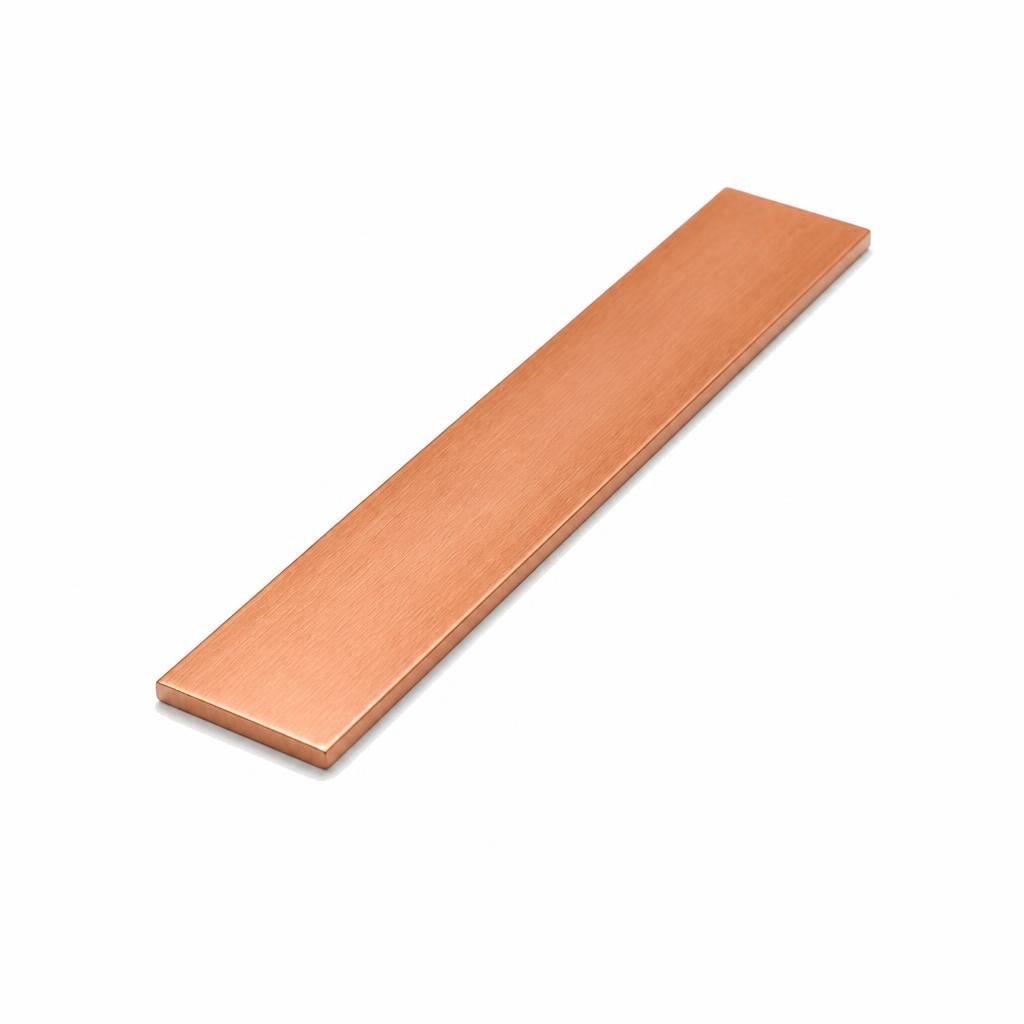
SHMM, SHMT, SHMTV
Copper busbars grades SHMM (soft), SHMT (hard), SHMTV (hard oxygen-free copper) per GOST 434. Used where enhanced conductivity, mechanical strength and contact durability are required.
For the designer: edge bending, argon welding, marking, painting of non-contact surfaces with electrical insulating enamels are possible. Length — from 2 to 6 m, coil weight up to 150 kg.
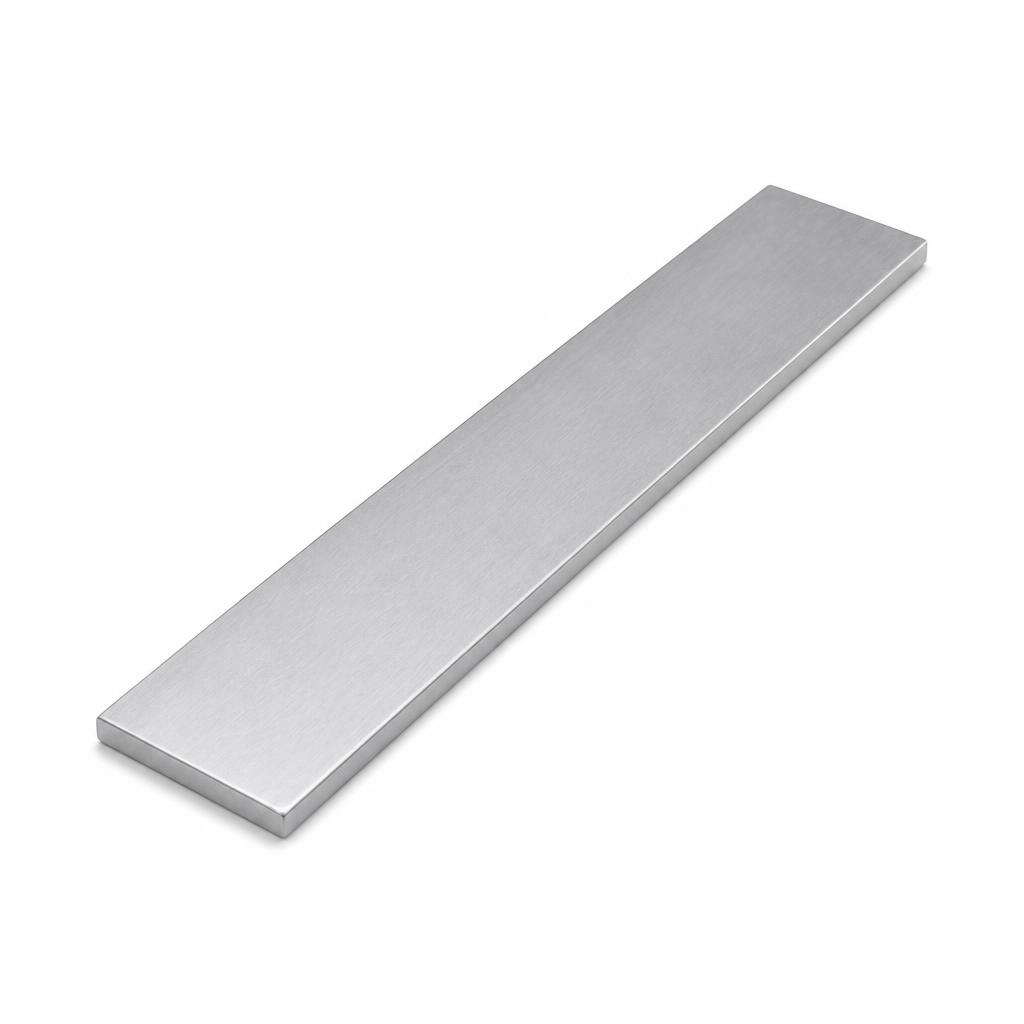
AD0, AD31
Aluminum busbars made of AD0, AD31 alloys (GOST 11069, GOST 15176). They have low weight, corrosion resistance and cost-effectiveness.
Limitations: not used in machines with moving parts and vibrating bodies due to brittleness. Length is multiple from 3 to 10 m depending on cross-section.
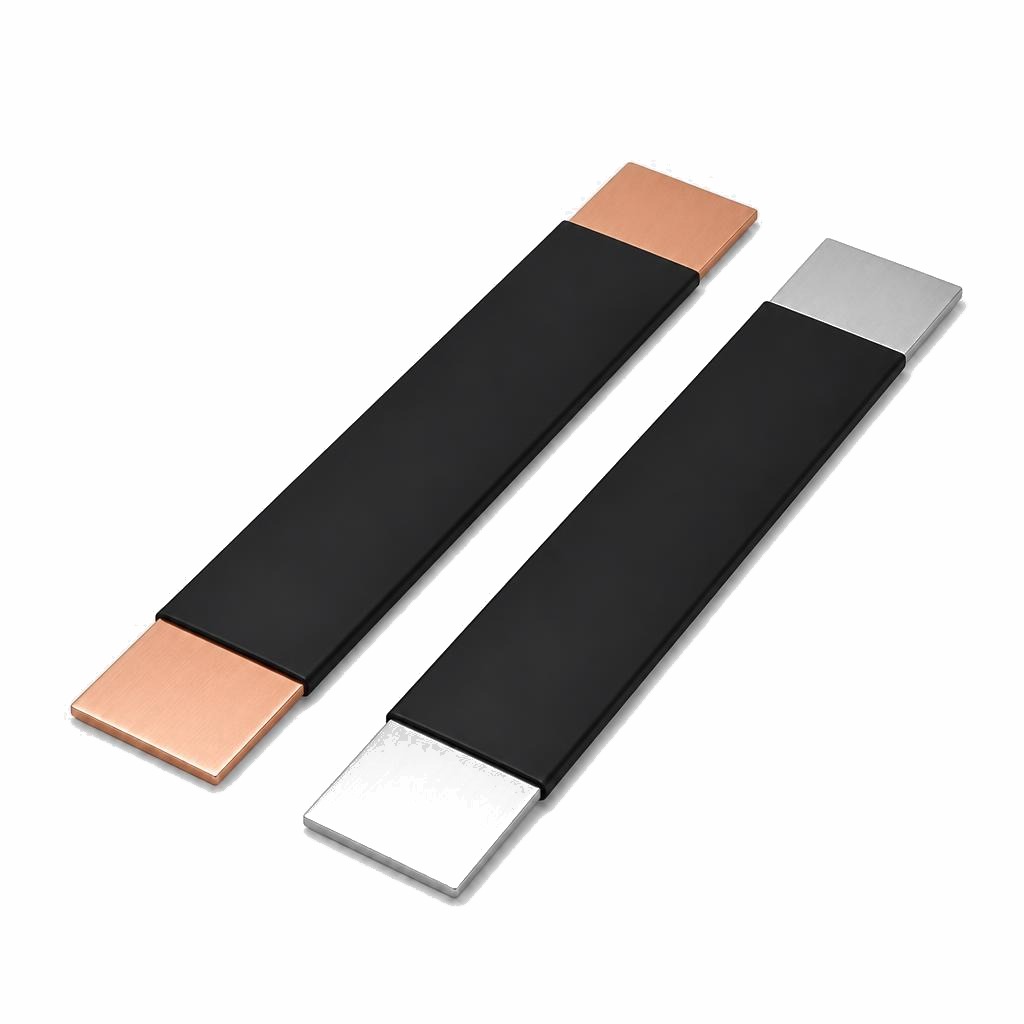
SHMTI, SHATI, SHMGI
Rigid (SHMTI copper, SHATI aluminum) and flexible (SHMGI copper) busbars in monolithic PVC insulation. Voltage classes 1 kV and 10 kV.
Manufactured according to TU 3449-001-97798631-2009 (SHMGI) and TU 3439-008-97798631-2013 (SHMTI, SHATI). Standard length — 4,000 mm. Additional marking applied upon request.
| Grade / size | Cross-section, mm² | 1 busbar, A | 2 busbars, A | 3 busbars, A | 4 busbars, A |
|---|---|---|---|---|---|
| M1t 4×50 | 200 | 760 | 1 110 | — | — |
| M1t 5×50 | 250 | 860 | 1 185 | — | — |
| M1t 6×50 | 300 | 955 | 1 410 | 1 805 | — |
| M1t 6×80 | 480 | 1 485 | 2 170 | 2 745 | — |
| M1t 8×50 | 400 | 1 110 | 1,675 | 2,175 | — |
| M1t 8×80 | 640 | 1,690 | 2,620 | 3,370 | — |
| M1t 10×50 | 500 | 1,265 | 1 930 | 2 530 | — |
| M1t 10×80 | 800 | 1 900 | 3 100 | 3 990 | — |
| M1t 10×100 | 1000 | 2 310 | 3 610 | 4 650 | 5 300 |
| M1t 10×120 | 1200 | 2 650 | 4 100 | 5 200 | 5 900 |
| M1t 10×160 | 1600 | 3 810 | 5 545 | 6 980 | 8 080 |
| M1t 12×120 | 1440 | 3 185 | 4 705 | 6 000 | 6 930 |
Permissible continuous current for copper busbars M1t / SHMTL and aluminum AD31t — from the general METAENERGY product catalog. Below is the full range of cross-sections (1–4 busbars) and standard sizes of insulated SHATI.
The continuous current ratings published in these tables are for reference purposes only. Source — METAENERGY general product catalog. The final busbar cross-section and layout is confirmed by the panel designer.
| Grade / size | Cross-section, mm² | 1 busbar, A | 2 busbars, A | 3 busbars, A | 4 busbars, A |
|---|---|---|---|---|---|
| M1t 2×20 | 40 | 220 | — | — | — |
| M1t 2×25 | 50 | 265 | — | — | — |
| M1t 3×15 | 45 | 210 | — | — | — |
| M1t 3×20 | 60 | 275 | — | — | — |
| M1t 3×25 | 75 | 340 | — | — | — |
| M1t 3×30 | 90 | 400 | — | — | — |
| M1t 3×40 | 120 | 525 | — | — | — |
| M1t 3×50 | 150 | 650 | — | — | — |
| M1t 4×20 | 80 | 320 | — | — | — |
| M1t 4×25 | 100 | 395 | — | — | — |
| M1t 4×30 | 120 | 475 | — | — | — |
| M1t 4×40 | 160 | 625 | 905 | — | — |
| M1t 4×50 | 200 | 760 | 1 110 | — | — |
| M1t 4×60 | 240 | 905 | 1 320 | — | — |
| M1t 5×20 | 100 | 345 | — | — | — |
| M1t 5×25 | 125 | 430 | — | — | — |
| M1t 5×30 | 150 | 530 | 800 | — | — |
| M1t 5×40 | 200 | 700 | 1 030 | — | — |
| M1t 5×50 | 250 | 860 | 1 185 | — | — |
| M1t 5×60 | 300 | 1 020 | 1 495 | 1 895 | — |
| M1t 5×80 | 400 | 1 345 | 1 960 | 2 465 | — |
| M1t 5×100 | 500 | 1 675 | 2 425 | 3 035 | — |
| M1t 6×20 | 120 | 375 | — | — | — |
| M1t 6×25 | 150 | 470 | — | — | — |
| M1t 6×30 | 180 | 590 | 900 | 1 175 | — |
| M1t 6×40 | 240 | 765 | 1 155 | 1 490 | — |
| M1t 6×50 | 300 | 955 | 1 410 | 1 805 | — |
| M1t 6×60 | 360 | 1 125 | 1 660 | 2 120 | — |
| M1t 6×80 | 480 | 1 485 | 2 170 | 2 745 | — |
| M1t 6×100 | 600 | 1 840 | 2 680 | 3 365 | — |
| M1t 8×20 | 160 | 410 | — | — | — |
| M1t 8×30 | 240 | 695 | 1 080 | 1 435 | — |
| M1t 8×40 | 320 | 905 | 1 380 | 1 805 | — |
| M1t 8×50 | 400 | 1 110 | 1 675 | 2 175 | — |
| M1t 8×60 | 480 | 1 320 | 1 970 | 2 540 | — |
| M1t 8×80 | 640 | 1 690 | 2 620 | 3 370 | — |
| M1t 8×100 | 800 | 2 080 | 3 060 | 3 930 | — |
| M1t 8×120 | 960 | 2 400 | 3 400 | 4 340 | — |
| M1t 10×20 | 200 | 565 | 920 | 1 260 | — |
| M1t 10×30 | 300 | 800 | 1 265 | 1 695 | — |
| M1t 10×40 | 400 | 1 030 | 1 600 | 2 115 | — |
| M1t 10×50 | 500 | 1 265 | 1 930 | 2 530 | — |
| M1t 10×60 | 600 | 1 475 | 2 560 | 3 300 | — |
| M1t 10×80 | 800 | 1 900 | 3 100 | 3 990 | — |
| M1t 10×100 | 1000 | 2 310 | 3 610 | 4 650 | 5 300 |
| M1t 10×120 | 1200 | 2 650 | 4 100 | 5 200 | 5 900 |
| M1t 10×160 | 1600 | 3 810 | 5 545 | 6 980 | 8 080 |
| M1t 12.5×60 | 750 | 1 700 | 2 605 | 3 420 | — |
| M1t 12.5×100 | 1250 | 2 740 | 4 080 | 5 245 | 5 870 |
| M1t 12×120 | 1440 | 3 185 | 4 705 | 6 000 | 6 930 |
| M1t 12×40 | 480 | 1 285 | 1 865 | 2 470 | — |
| M1t 12×100 | 1200 | 2 680 | 3 985 | 5 115 | 5 790 |
| Grade / size | Cross-section, mm² | 1 busbar, A | 2 busbars, A | 3 busbars, A | 4 busbars, A |
|---|---|---|---|---|---|
| AD31t 3×20 | 60 | 215 | — | — | — |
| AD31t 3×25 | 75 | 265 | — | — | — |
| AD31t 3×30 | 90 | 310 | — | — | — |
| AD31t 3×40 | 120 | 365 | — | — | — |
| AD31t 3×50 | 150 | 505 | — | — | — |
| AD31t 4×20 | 80 | 250 | — | — | — |
| AD31t 4×25 | 100 | 305 | — | — | — |
| AD31t 4×30 | 120 | 360 | — | — | — |
| AD31t 4×40 | 160 | 480 | — | — | — |
| AD31t 4×50 | 200 | 590 | 930 | — | — |
| AD31t 4×60 | 240 | 700 | 1 100 | — | — |
| AD31t 5×20 | 100 | 285 | — | — | — |
| AD31t 5×25 | 125 | 345 | — | — | — |
| AD31t 5×30 | 150 | 410 | — | — | — |
| AD31t 5×40 | 200 | 540 | — | — | — |
| AD31t 5×50 | 250 | 665 | 1 060 | — | — |
| AD31t 5×60 | 300 | 790 | 1 250 | — | — |
| AD31t 5×80 | 400 | 1 045 | 1 635 | 1 910 | — |
| AD31t 5×100 | 500 | 1 295 | 2 020 | 2 350 | — |
| AD31t 6×20 | 120 | 320 | — | — | — |
| AD31t 6×25 | 150 | 390 | — | — | — |
| AD31t 6×30 | 180 | 455 | — | — | — |
| AD31t 6×40 | 240 | 595 | — | — | — |
| AD31t 6×50 | 300 | 740 | 1 175 | — | — |
| AD31t 6×60 | 360 | 870 | 1 350 | 1 720 | — |
| AD31t 6×80 | 480 | 1 150 | 1 630 | 2 100 | — |
| AD31t 6×100 | 600 | 1 425 | 1 935 | 2 500 | — |
| AD31t 8×20 | 160 | 380 | — | — | — |
| AD31t 8×30 | 240 | 540 | — | — | — |
| AD31t 8×40 | 320 | 700 | — | — | — |
| AD31t 8×50 | 400 | 865 | 1 400 | — | — |
| AD31t 8×60 | 480 | 1 025 | 1 680 | 2 180 | — |
| AD31t 8×80 | 640 | 1 320 | 2 040 | 2 620 | — |
| AD31t 8×100 | 800 | 1 625 | 2 390 | 3 050 | — |
| AD31t 8×120 | 960 | 1 900 | 2 650 | 3 380 | — |
| AD31t 10×20 | 200 | 440 | — | — | — |
| AD31t 10×30 | 300 | 620 | — | — | — |
| AD31t 10×40 | 400 | 825 | 1 320 | — | — |
| AD31t 10×50 | 500 | 980 | 1 615 | 1 960 | — |
| AD31t 10×60 | 600 | 1 155 | 2 010 | 2 650 | — |
| AD31t 10×80 | 800 | 1 480 | 2 410 | 3 100 | — |
| AD31t 10×100 | 1000 | 1 820 | 2 860 | 3 650 | 4 150 |
| AD31t 10×120 | 1200 | 2 070 | 3 200 | 4 100 | 4 650 |
| AD31t 10×160 | 1600 | 2 950 | 4 625 | 5 400 | 5 225 |
| AD31t 12×120 | 1440 | 2 470 | 3 925 | 4 645 | 4 935 |
| Designation | Cross-section, mm² | Thickness × Width, mm | Length, mm |
|---|---|---|---|
| SHATI 10×20 | 200 | 10 × 20 | 4000 |
| SHATI 10×25 | 250 | 10 × 25 | 4000 |
| SHATI 10×30 | 300 | 10 × 30 | 4000 |
| SHATI 10×40 | 400 | 10 × 40 | 4000 |
| SHATI 10×50 | 500 | 10 × 50 | 4000 |
| SHATI 10×60 | 600 | 10 × 60 | 4000 |
| SHATI 10×80 | 800 | 10 × 80 | 4000 |
| SHATI 10×100 | 1000 | 10 × 100 | 4000 |
| SHATI 10×120 | 1200 | 10 × 120 | 4000 |
| SHATI 10×160 | 1600 | 10 × 160 | 4000 |
| SHATI 12×100 | 1200 | 12 × 100 | 4000 |
| SHATI 12×120 | 1440 | 12 × 120 | 4000 |
Basic physical and electrical characteristics of copper and aluminum power busbars (values depend on the specific design and may be clarified in the product datasheet).
| Parameter | Copper busbars (SHMT, SHMM) | Aluminum busbars (AD0, AD31) |
|---|---|---|
| Material | Cu-ETP (M1), mass fraction Cu ≥ 99.9% | AD0, AD31, aluminum grades A5, A6, A7 |
| Specific electrical resistivity | ≤ 0.01724 µΩ·m | AD0 ≤ 0.029; AD31 0.0325–0.0350 µΩ·m |
| Cross-section range | 159–1498 mm² (standard), up to 300×30 mm | 30–25,800 mm², up to 500×20 mm |
| Continuous current rating | 210–2950 A (120×10 mm), higher with greater thickness | 165–3200 A (depending on cross-section) |
| Thermal expansion | Compensated by flexible connectors or flexible inserts | Require expansion joints; flexible connectors are manufactured in series |
| Insulation | Optional PVC 1/10 kV, enamel | Optional PVC 1/10 kV, enamel |
| Corrosion resistance | High (especially with tinning) | High, but limited by oxidation in open air |
| Application | Elevated requirements, critical components | Mass-produced equipment, stationary switchgear |
Customer drawings are processed within a few business days. Edge bending, argon welding, marking, and packaging for "just-in-time" installation are available.
A combination of in-house high-precision manufacturing and customer-focused approach, proven by experience in supplying power generation and machinery enterprises.
Punching, cutting, bending of busbars according to program, minimizing errors. Equipment is maintained by certified personnel.
Galvanic tinning stations for contact zones Sn-Bi 6–12 µm, argon welding of aluminum and copper busbars, finishing workshop.
Verification of geometry and electrical parameters according to specifications. Shipping to any location in Russia, packaging according to transportation requirements.
Manufacturing of busbars with bends in the edge plane, including bar stock. Allows precise routing around obstacles in the enclosure.
Application of alphanumeric and color markings according to design documentation, including under heat shrink.
Painting with electrical insulating enamels of busbar parts not involved in contact, for additional protection and phase marking.
Argon welding of copper and aluminum parts, fabrication of permanent assemblies according to drawings.
Transition to flexible copper connections and aluminum busbar expansion joints (KShA) to compensate for thermal expansion.
Each batch is accompanied by a certificate, packed in transport containers made of plywood or wood, protecting against mechanical damage.
Power busbars are a key connecting element inside LV switchgear and substations. Together with other current-carrying systems, they form a complete current distribution network.
30–25,800 mm²
From miniature grounding busbars to powerful main distribution switchboard bus assemblies.
165–3 200 A
Achieved by selecting cross-section and material; flexible busbars have equivalent current capacity.
1 kV and 10 kV
Selection of insulation thickness and PVC compound color according to the project.
Leave your contact details — we'll call back and prepare an equipment proposal.